
This Is How a Farmer in the Sand Dunes Is Restoring His Land
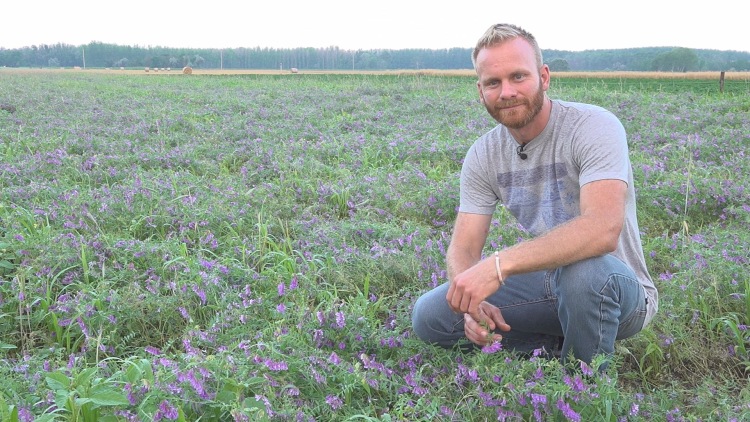
Farming in the Homokhátság region has always been a challenging task. Due to the sandy soils that dry out quickly, increasingly extreme weather, and a lack of rainfall, many farmers are seeking solutions that will ensure the long-term security of their production. According to Zoltán Szabó, a farmer from Kiskunmajsa, the answer lies not in even more intensive tillage, but in in regenerative agriculture, lies in no-till technology and the deliberate involvement of animals.
A New Perspective from a Family Legacy
Zoltán Szabó took over the land from his parents, which had previously been part of his grandparents’ farm. As he explains, he has seen since childhood just how much of a challenge drought poses on sandy soils. A prolonged drought can cause visible symptoms in plants in as little as two weeks, because these soils are unable to retain much water. This prompted him to seek a different approach. He has been farming with a regenerative approach since 2017, has been experimenting with no-till technology since 2020, and will be applying this technology across the entire farm starting in 2025.
Direct seeding, mulching, live roots
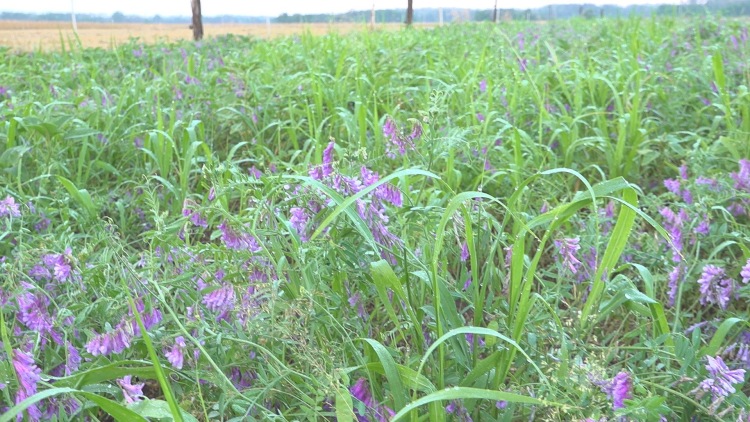
One of the farm’s key principles is to keep the soil uncovered for as little time as possible. Zoltán Szabó uses direct-seeding mixtures that include several plant species at once. The fields also feature square-stemmed vetch, rye-beet, muhar, and sand beans. Legumes are particularly important. According to the farmer’s experience, the soil’s nitrogen level quadrupled after growing lednek, a finding that has been confirmed by tests. Bean and sand pea also aid in natural nitrogen fixation, while leaving behind soil conditions that are more favorable for subsequent crops.
Sheep don't just graze—they also work
Animals also play an important role in the regenerative system. Zoltán Szabó currently keeps 30 ewes, but in the long term, he would like to expand his flock to 160 animals. He believes this is the carrying capacity of his land, and with a flock of this size, he could effectively implement short-rotation, intensive grazing.
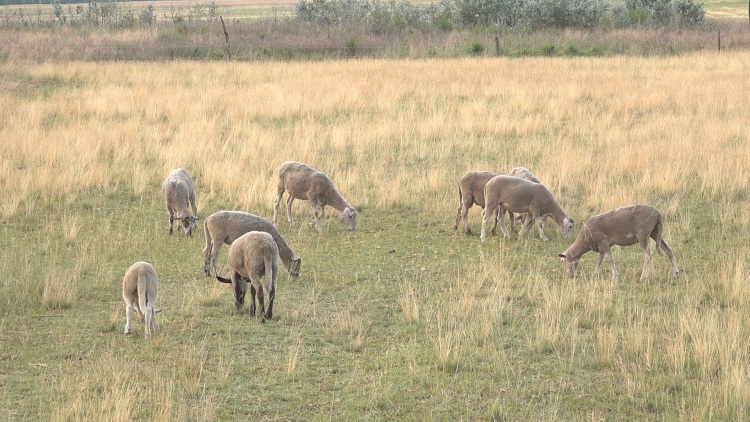
Sheep are not just livestock: through grazing, trampling, and manure, they can contribute to grasslands for its renewal. Grasslands that have deteriorated and are no longer easily usable for mowing can thus once again become valuable.
Poultry Against Insects
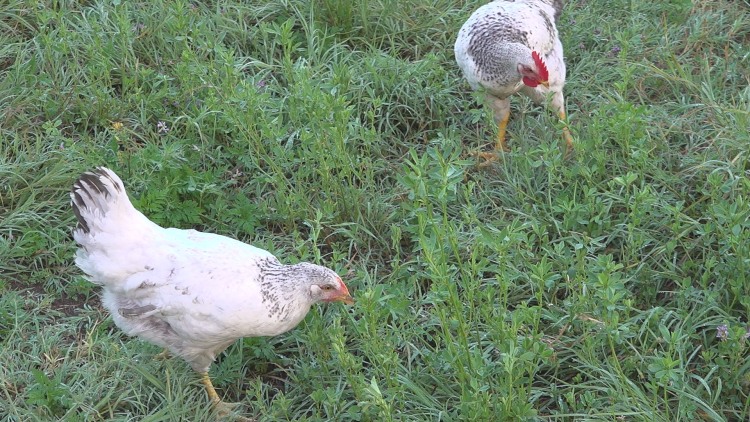
On the farm, poultry can also be part of the system. According to Zoltán Szabó, the goal is not to confine the animals within four walls and concrete, but to let them work outdoors: fertilizing the land, controlling insects, and generating income in the process. This can be particularly necessary in areas where grasshoppers cause serious damage. According to the farmer, the insects first appear in large swarms on grasslands and can then go on to damage crops in the fields.
Experiments on Sandy Soil
Zoltán Szabó’s farm also serves as an experimental site. He is comparing different varieties of rye and legumes to determine which combinations work best under local conditions and which are best suited for livestock farming.
The goal is not necessarily to achieve maximum yield, but rather to find a system that is functional, economical, and builds up the soil. Due to extreme weather conditions, he uses lower seeding rates: if there is rainfall, production can still be economical; however, if a drought occurs, fewer plants will compete for the same limited amount of moisture.
„Only ”no’ is the future”
Zoltán Szabó is convinced that tillage further degrades soil condition in sandy ridge areas. In his view, plowing burns organic matter, and microbial life is also harmed in the exposed, heating sandy soil. In contrast, under the no-till system, the soil is continuously covered, living roots are constantly present, and soil life can be restored by increasing biodiversity. According to the farmer, this can set in motion a trend toward improvement rather than deterioration.
Congratulations, supportive comments
The exceptionally high view count and supportive feedback on our recent video with Zoltán Szabó show that more and more people are embracing the principles of regenerative agriculture. Many people are looking for practical examples that demonstrate the potential of regenerative farming not just in theory, but on actual working farms. Be sure to check out our video featuring Zoltán Szabó:
 English
  Magyar
  Deutsch
  Slovenčina
  Українська
  Polski
  Русский
  Slovenščina