
Facts and myths about cover crops
Cover crops are an essential pillar of soil regeneration, yet there are many misconceptions about the integration of cover crops into farming systems.
„I've been talking to a number of farmers recently and I have a feeling that they need to get their heads straight,” a friend contacted me, TMG-mate (From the Soil Restoration Farmers' Association) in the recent past. He pointed out that he believes that there is misinformation circulating about the use of blanket plants, which should be clarified. In the previous issue I tried to appeal to the veil on the use of glyphosate and the abandonment of soil tillage. This time, let's see what's new in the field of cover crops...
The real doubters simply say that they don't believe that using them will make anything better. Others think that the dry summers mean that the cover crops will never sprout anyway, and it's a waste of money. If they do sprout, they take water away from the main crop, so they can cause yield losses. Others say that a blanket-plant table is a breeding ground for various pests. On top of all this, pockmarks will dig up the areas, and various fungal diseases will breed and overwinter in the mulch.
Before we get a clearer picture of these issues, let's look at what the point of sowing cover crops is in the first place.

Photo: shutterstock.com
The basics of regenerative agriculture
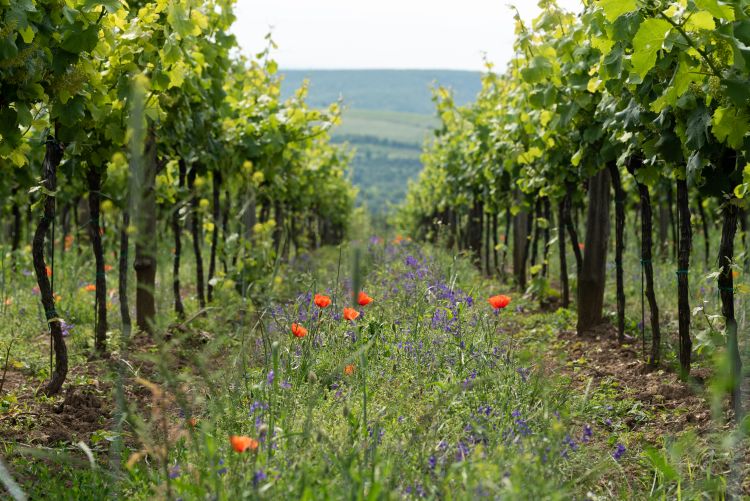
Regenerative or soil regenerative agriculture is based on the principles of soil health (see box). They are a guiding light that we can follow to ensure that the the health of our soil and thereby increase its fertility and resilience. Cover crops fit in well with all the soil health principles, as they can be used to build soil structure without mechanical disturbance, cover the soil and provide a living root system outside the growing season. They can be an effective tool for enhancing biodiversity, in particular by using mixtures. Moreover, if animals are integrated, cover crops can be well grazed.
If we want to improve farmland, it is crucial that we look at it as a living system. In a natural system, the living organisms in the soil feed the plants. A natural grassland or forest does not require any artificial nutrient inputs, yet it can produce a huge amount of nutrients due to the complex biological system that feeds the vegetation. It is not a one-way process. The plants pay handsomely for the microbes that feed them. Plants, which can photosynthesise, trade the carbon they release into the soil, and capture anything that lives and moves for the business, in order to obtain nutrients that they cannot explore for on their own. Soil-dwelling organisms it is essential for them to have a continuous plant root system to provide habitat and food outside the breeding season. This plant cover maintains the continuity of soil microbial life, promotes nutrient cycling and helps maintain soil structure throughout the year.

Photo: shutterstock.com
Misconception: cover crops never sprout anyway
„Why plant a cover crop if it's not going to grow?” - is a common and legitimate question. Where rainfall is scarce, soil conditions are poor and sowing is technologically challenging, this is a huge risk. This spring, a young farmer friend of mine approached me with the idea of turning a 10 hectare degraded field into a mixed orchard. He started the soil improvement work by sowing a seed mix of butterflies and grasses, scattered over the pre-drilled area. Without enough experience and information, the result was that the competitive advantage of ragweed won out, and the ants and other insects in the area were able to feed on the poisonous seed. We can try again.
Practical advice for beginners
What does the experienced farmer say? Ferenc Berendthe owner of Somogyi Kószáló Farm and a board member of the TMG Association, I asked him what advice he would give to someone who is just starting to use cover crops.
„First you tidy up your area”, replied Ferenc Berend. „If there are weeds in the area that need to be eradicated, then deal with that first and then start blanket planting. Start with a mix of at least five to six species. Include an equal proportion of small seeds such as facelia as a phosphorus mobiliser, tillage radish, which accumulates, nitrogen fixing and grasses. Don't start with five to ten kilos, but sow 50 kilos per hectare.” Ferenc also stressed not to sow seeds too shallow, but deep enough for them to germinate.
„The cover crop should be considered as a staple plant,” he says Zoltán Szabó farmer from kiskunmajsa, TMG member and regenerative consultant. „They should be placed in the same weed-free area, properly seeded and fed. Weed fertility is the most important thing because they are earlier in development and produce seed very quickly.”

Three years ago, a forest strip was planted in Kiszombor (photo by the author)
Misconception: taking water away from the main crop
If we have already sown the cover crop and it has sprouted, will it draw water away? „Never put a cover crop in front of autumn-sown crops, because it will take the water out, it's always very dangerous, there's very little chance of your main crop doing well here,” warns Ferenc Berend, referring to the climate and rainfall conditions in Hungary.
On Ferenc Berend's farm, cover crops are always planted only after cereals and before harvests. The important thing is that they are present throughout the winter. Sandy oats, rye, broad beans, peas, facelia, tillage radish: these are the basics. To this you add any biennial seeds you have missed: e.g. sunflowers, maize. On Ferenc's farm, an 80-headed gully grazes the cover crops, and so more maize is used in the mix, but it is the first to go when the frosts come. The most successful mix depends not on species composition but on the weather. When it succeeds and when it fails depends on whether there is enough rainfall and nutrients to grow.
Fact: They improve water balance and water conservation
A healthy soil structure can retain more water and improve water infiltration, reducing surface run-off and drought stress. The root systems of cover crops improve the porosity and friable structure of the soil, which helps water infiltrate faster and deeper. In addition, the plant mass covering the soil surface reduces evaporation, reduces water loss and protects the soil from the erosive effects of rainfall.
If cover crops are used exclusively as green manure, they are really just a water drain, as plants take a significant amount of water from the soil during their initial developmental stages. The problem is further compounded by the application of green manures. For cover crops, once the initial drier autumn turns to a wetter one and sufficient rainfall occurs during the winter period, the initial water loss evens out and the balance becomes positive.
„What I used to say is that our cattle consume 1,800 litres of water a day, and in the wettest periods we don't have to take them out to drink for a whole month. Because thanks to the constant humidity and rain, our cover crops also catch at least that much per hectare per day,” says Ferenc.

In traditional farming, animal manure was regularly returned to the fields, slowing soil degradation (photo: shutterstock.com)
Is a blanket plant board really a breeding ground for pests and pathogens?
„I always have pockmarks, but there is never a gradation and they never cause an economic problem,” says Zoltán Szabó. „As long as there is plant cover and they can hide and move around undisturbed, they will breed. When winter comes and the vegetation is overgrown, and tunnels and movement become visible, the birds of prey hunt them down.” Around Kiskunmajsa, the contiguous patches are relatively small, bordered by numerous clumps of trees and woodland. Thanks to the abundance of trees and thus of hiding and nesting places, there are many
a bird of prey. By day it is decimated by buzzards and bloodhounds, and by night by owls. Ferenc Berend made a similar comment. We had a sow problem last year, but the damage did not exceed the economic threshold.„
Where there are no forest strips or nesting sites, it is worth planting. Attila Szeredi a farmer from Szisombor, also a board member of the Soil Restoration Farmers' Association, has installed T-trees and burrows for birds of prey in cooperation with the Ornithological Association. In 2022, Attila also started to install field protection forest strips, which provide a natural habitat for birds of prey. The wooded, shrubby strips, made up of more than ten species, include oaks, field maple, black poplar, bird cherry, stonecrop, hawthorn and crowberry. Field buffer strips are not just a long-term means of controlling pockmarks. They provide protection against wind and erosion, improve microclimate and soil water balance, while also providing habitat for a wide range of other beneficial organisms, thus promoting landscape-level regeneration.
Misconception: pathogens multiply
„If we grow in monoculture, on inanimate soil, it is indeed a breeding ground for pathogens,” said Zoltán Szabó. For him, crop rotation, the use of cover crops and cereal-vegetable intercropping create a soil condition that can make his farm partially resistant to fungal pathogens. Unfortunately, this does not always work. Last year, an outbreak of pea fusarium blight swept through the eastern part of the country. It practically destroyed 100% of the fields, and Zoltán's farm was one of the victims. The fusarium-infected pea field had been treated with a spiked led, but the disease no longer appeared. Zoltán sees two explanations for this: either the enhanced soil life resulting from regenerative technologies does not allow fusarium to grow, or the decomposers in the worm castings-based microbial preparation applied to the soil and seed treatments have consumed the overwintering formulas of the pathogen in the soil.

A blanket plant table is a breeding ground for pests of all kinds... but is it?
(photo: shutterstock.com)
„We don't have a pathological problem”, Ferenc Berend answered firmly when I asked him about the problems with microbiological pathogens. „Since we have reduced the number of cultivations, fungal and bacterial diseases are practically non-existent.” Thanks to regenerative technologies, of which the use of cover crops is an integral part, the biological system of the soil is being built up and its natural disease-suppressing capacity is being developed. According to Ferenc, it is not true that cover crops and the layer of mulch on the surface are a breeding ground for pathogens. In contrast to the soil, the pathogens present in the surface mulch are much more exposed to heat and radiation. „The living conditions are simply not suitable for them,” concludes Ferenc Berend, who has more than a decade of experience and successes, as well as many failures in regenerative agriculture, no-till and cover crops. The biggest danger is not if we sometimes make mistakes with cover crops, but if we continue to stand idly by and watch our soils slowly lose their viability.
The cover crop is not a magic bullet, but a living ally that can only benefit us if we understand how it works and consciously integrate it into our farming. Those who are willing to look deeper into the life of their soil will see cover crops not with fear but as an opportunity. The real question is not whether it is worth sowing, but whether we can afford not to. After all, regeneration doesn't happen overnight - but every seed sown is a step towards more fertile, resilient soil and a life-sustaining future.
Principles of soil health
Avoiding tangle
There are three ways in which soil can be disturbed: physically, chemically and biologically. The most common form of physical soil disturbance is ploughing and other intensive tillage practices. Ploughing brings deeper soil layers to the surface while organic plant residues are mixed into the soil, accelerating the decomposition of organic matter. Although no-tillage practices, such as disking, do not turn the soil, they can significantly damage its living tissue and structure. Chemical tilling is primarily the overuse of chemicals, which can seriously threaten soil microorganisms. Biological disturbance occurs, for example, when overgrazing or the introduction of alien, disturbing organisms occurs.
The ground should always be covered
The soil can be covered with living vegetation or a layer of lifeless soil. Covering the soil is key to protecting the surface by mitigating environmental impacts such as erosive forces from rain and the damaging effects of direct sunlight. Ground cover helps reduce erosion by wind and water, improves infiltration of rainfall and irrigation water, reduces evaporation and helps suppress weeds. It also provides habitat for organisms living near the soil surface that play a vital role in the soil food web and its healthy functioning.
Have a permanent living root system
Root exudates from main crops and cover crops sown outside the growing season feed the soil nutrient network throughout the year, supporting the survival of soil micro-organisms. Plant roots play a role in the formation and maintenance of friable soil structure and help to create pores, which are essential for proper soil aeration and efficient water infiltration.
Increasing plant diversity
In order to maintain and enhance biodiversity, it is advisable to use a varied crop rotation, co-seeding, intercropping and different cover crops. These methods mimic the natural communities of diverse plant species present at soil formation, which play a fundamental role in soil building and the development of a rich, stable food web. Such diverse systems are more resistant to plant pathogens and diseases, thus contributing to long-term sustainable crop production.
Integrating animals into the system
Nowadays, livestock and crop production have become significantly separated, although in traditional farming, animal manure is regularly returned to the fields, slowing soil degradation. In regenerative farming systems, animals can be involved: by grazing the stems of the main crop and cover crops, manure is applied directly to the soil without the need to disturb it. This promotes the natural cycling of nutrients and supports soil life.
Knowledge of the context
There is no recipe for regenerative agriculture. Improving soil health is not a one-size-fits-all process. Systemic farming decisions must take into account local environmental, economic and social conditions. This includes, for example, soil type, climate, rainfall, topography, available tools and labour, and farm objectives and opportunities.
To bet or not to bet - that is the question
Cover crops are not panaceas, but living allies for soil health. Their use requires awareness, preparation and experience, but the energy invested pays off in the long run. Every seed sown is a step towards more fertile, resilient soil. The real question today is no longer „is it worth sowing”, but whether we can afford not to. Sustaining soil life is not only an agronomic responsibility, but also an environmental and social one. Once we understand how the system works, cover crops become an investment - not a cost - in the future.

Photo: shutterstock.com
Author: Víg Vitália
The author is a soil ecologist, education programme officer of the Soil Renewal Farmers Association, and founder of Terravitka.
 English
  Magyar
  Deutsch
  Slovenčina
  Українська
  Polski
  Русский
  Slovenščina