
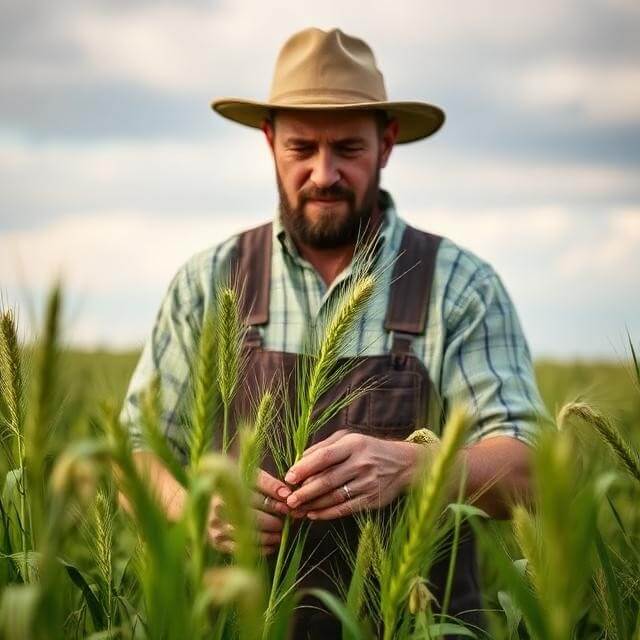
Correct selection and use of plant protection products: fungicides, insecticides and herbicides
An essential part of plant protection is the informed choice and professional use of plant protection products. The right product not only helps to control pathogens and pests, but also contributes to crop safety and economic production.
Plant protection products fall into three broad categories: fungicides, insecticides and herbicides. They are used in different ways and for different purposes, so it is important to know how they work and what they can be used for.
The role of fungicides in plant protection
The fungicides can be divided into two main groups: banding agents and herbicides.
Seed dressings are mainly used for seed treatment (dressing). When applied to the surface of the seed, they prevent fungal infections from the soil or seed. This preventive treatment, even before sowing, reduces the risk of later diseases.
Fungal treatments used in the herd can be either contact or absorbed. Contact products act on the surface of the plant and provide mainly preventive protection. Absorbent products, on the other hand, penetrate the plant and not only provide protection, but can also stop mild infestations that have already developed. Among the contact products, there are several solutions authorised for organic farming, such as copper, sulphur or oil-based products.
Insecticides: targeted or general control
Insecticides can be applied either by drenching or as soil disinfectants at the time of sowing (as close to the seed as possible). Soil disinfectants are used to reduce the number of pests in the soil.
Insecticides applied in the herd may include selective, which target only specific insect species. Their action is often based on developmental inhibition or stomach poisoning. non-selective insecticide drugs, typically pyrethroids, act as neurotoxins but have no lasting effect.
It is important to note that one of the unintended consequences of the ban on insecticide spraying is that the the need for more threaded stock management instead of one-off management. This means more pesticides per hectare and a significantly higher energy demand.

Herbicides: inside and outside the herd
For herbicides distinguish between out-of-stock and in-stock treatments.
Out-of-stock interventions before sowing, or after sowing, but even take place before the crop emerges. These are designed to give the crop an initial advantage.
Post-harvest stubble management is a priority, which can effectively control perennial weeds that are difficult to control, such as pine needles, acacia or reeds.
The herbicides are sprayed with selective herbicides. This means that the product kills weeds without causing significant damage to the crop. Selectivity can be achieved in several ways: based on differences in physiology, morphology, location or developmental stage.

Glyphosate, GMOs and the issue of desiccation
Not authorised in the European Union, but widely used worldwide genetically modified crops cultivation. The best examples of these are GMO (Genetically Modified Organisms) maize, soya and cotton, which resistant to a total herbicide, glyphosate. This explains the high global use of the active substance.
However, in Europe and Hungary, typical crops such as wheat, barley, oats, sunflower or rapeseed are non-GMO. Nevertheless, glyphosate residues may be present in harvested crops, which are mostly improperly performed desiccation results.
Desiccation is the drying of the crop before harvest. It aims to reduce the water content of the crop, speed up harvesting and reduce weather risks. Desiccation is a common practice in countries with more arid climates, but not at all in Hungary.
Plant protection products with responsibility
A plant protection products is no longer just a technological issue, but approach and responsibility is. Fungicides, insecticides and herbicides all play an important role in maintaining crop safety, but their impact, timing and mode of application have a significant impact on the environment, soil life and ultimately the sustainability of production.
Knowledge of the different mechanisms of action and delivery methods will help you to the protection is targeted, justified and effective.
The use of plant protection products is an integral part of modern agriculture, and it is therefore an increasingly important issue to when, why and to what extent we use these tools. The proper use of fungicides, insecticides and herbicides not only helps to control pathogens and pests, but also affects soil life, beneficial organisms and the functioning of the whole agroecosystem.
A conscious plant protection does not mean more intervention, but choosing the right tool at the right time, a focus on prevention, thinking in terms of the whole production system and continuous monitoring of the herd.
Knowledge and responsible use of plant protection products are therefore essential not only for the success of the current crop, but also for the more resilient, stable and sustainable in the long term contributes to the development of agroecosystems.
 English
  Magyar
  Deutsch
  Slovenčina
  Українська
  Polski
  Русский
  Slovenščina