

A Farmer's Financial Guide: How to Calculate the True Cost of Production?
Agriculture is a unique sector: while a farmer’s work greatly influences crop yields, these are also significantly determined by external factors beyond the farmer’s control, such as the weather or the characteristics of the growing area. Beyond a certain point, these factors limit productivity—for example, under arid conditions, we cannot expect a wheat yield of 10 metric tons.
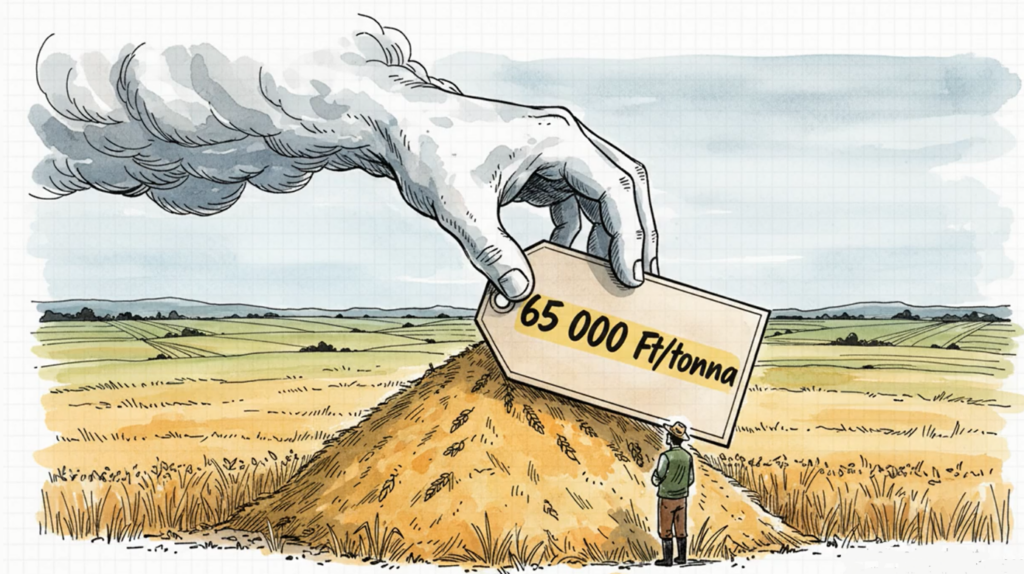
The purchase price of crops is determined by the market; producers have no control over it. Production costs, on the other hand, are a factor that can be significantly influenced by conscious decisions. That is precisely why it is important to know exactly how much it actually costs to cultivate one hectare.
It is a big mistake to ignore the depreciation of machinery
Practicing farmers know all too well how expensive a new machine can be—and that maintaining a used machine isn’t always cheap either. At the same time, significant cost savings can be achieved by continuing to use machinery that is in good technical condition and has already been fully depreciated for accounting purposes (typically machinery older than seven years), provided it is kept in proper working order.
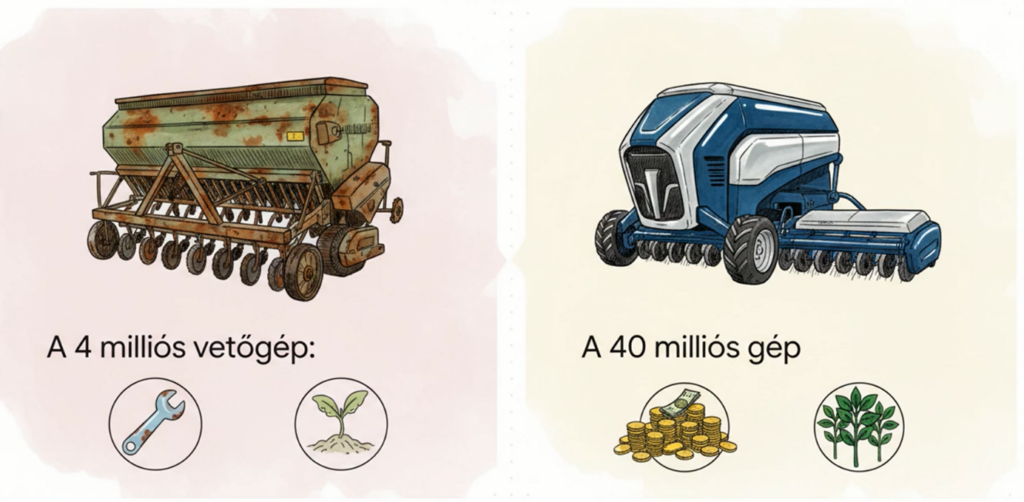
Of course compromises must be made: A 4-million-forint seeder is not the same as a new 40-million-forint machine. Although their function is the same—placing seeds in the soil—there can be significant differences in work quality, speed, and the technologies that can be used. This also includes whether we purchase a machine designed for direct seeding or convert an existing machine. While this may increase the cost of seeding, it can significantly reduce the total cost of production.
Labor rates provide a good estimate
Calculating all of this down to the last forint, keeping accurate records, and managing the business at the same time is no easy task. However, when it comes to making decisions, agricultural labor rates serve as an excellent starting point.
The 2026 contract work price lists are available from several companies. I reviewed them and compiled a summary table based on the average of the figures I considered realistic, which is useful for preparing economic decisions.
Labor costs generally include the following cost elements:
(typically in Ft/ha or Ft/operating hour)
- cost of the machine,
- fuel,
- machine operator's wages,
- maintenance,
- depreciation (depreciation is often one of the largest expense items).
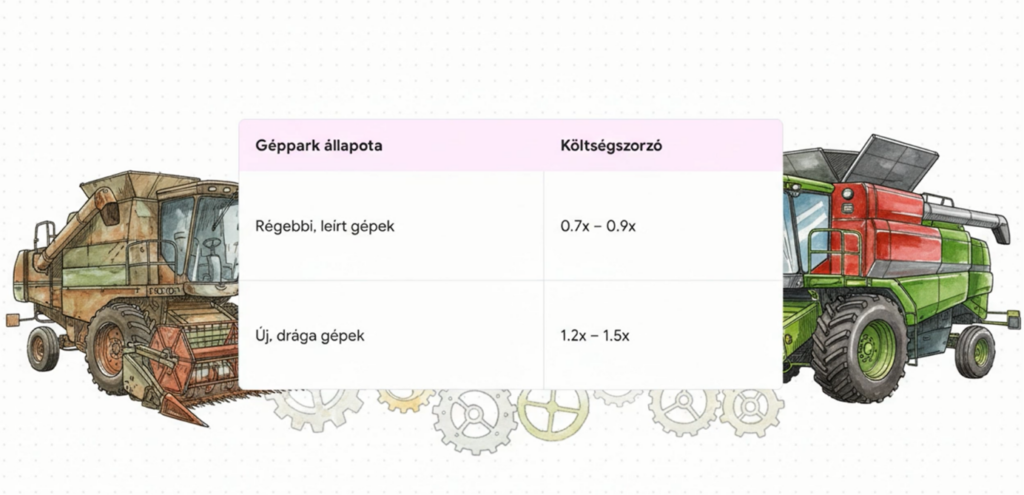
That is why I recommend that everyone adjust their contract labor rates to match their own fleet of machinery. If you work with older machinery that is inexpensive to maintain, a multiplier of 0.7–0.9 may be realistic. If, on the other hand, you produce using new, high-value machinery, it is better to use a multiplier between 1.2 and 1.5.
These multipliers are based on my own experience and many years of cost calculations; I have not found any official recommendations for them. To give a simple example, the cost of hiring a 20-year-old combine harvester and a new machine costing over 100 million forints obviously cannot be the same.
There is also a wage for work on a family farm
A family farmer might easily say that, since he works for himself, he doesn’t have to pay himself a salary. In reality, however, he has to make a living somehow. Even if we don’t account for a separate salary, it still shows up in the general operating costs.
A simpler and more comparable approach is to use labor costs as a baseline and deduct income from any profits.
Inputs and seeds: key components of production costs
In addition to machinery costs, a significant portion of production costs is attributable to raw materials: seeds, fertilizers, and pesticides.
In the case of cereal crops, seed can even be produced on the farm itself. For warm-weather crops—such as corn or sunflowers—this is much less common, as the use of hybrids has become widespread. Thanks to the heterosis effect, these crops offer higher yield potential, so producing one’s own seed is generally not economical for these plants.
General Operating Expenses
In addition to the cultivation costs per hectare General operating costs must also be taken into account. This includes all expenses that are not directly related to production but are necessary for the farm’s operation: For example, the cost of maintaining the facility, the salaries of office staff, or the cost of servers.
This amount can vary significantly from farm to farm, ranging from 10,000 to as much as 100,000 Ft/ha. Based on my own experience, approximately 20,000 HUF per hectare can be considered the average figure in Hungary, which, at a wheat price of 65,000 HUF per metric ton, corresponds to roughly 0.3 metric tons of wheat per hectare.
Budget Preparation
If we accept the above calculation principles, we can draw up the budget. I'm approaching the issue from the opposite angle: First, I look at the expected revenue, and then I allocate the expenses accordingly.
This makes it easier to determine whether the business is expected to be profitable without subsidies or only with them. For many Hungarian farms, subsidies continue to play a significant role in profitability, so it is worth taking this into account in the calculation.
I will use wheat as an example in this calculation, since it currently accounts for the largest area under cultivation.
Current market prices project a purchase price of approximately 65,000 HUF per metric ton for non-premium-quality wheat. The growing region and the technology used will most likely determine the expected yield. If the average yield in a region has been around 5 metric tons per hectare for many years, it is not worth planning for a yield of 9–10 metric tons solely on the hope of a rainy year. The foundation of sound farming is adjusting costs to the realistically expected yield level.
Intensive and Extensive Technologies
Different Farming Systems – from plow cultivation all the way to no-till – result in different cost and profitability conditions. The same is true whether we are working with a new fleet of machines or one that has already been fully depreciated.
Regenerative technologies can influence production costs in several ways:
(In addition to improving soil conditions.)
- fewer tillage passes,
- lower fuel consumption,
- minor engine wear,
- improved soil structure and water retention,
- more stable crop yields over the long term.
Significant savings can be made on inputs—such as fertilizer—but excessive reductions can also lead to crop yield losses. The 120 kg of nitrogen active ingredient mentioned in the example is part of a standard farming practice, which, in my experience, closely reflects current practices.
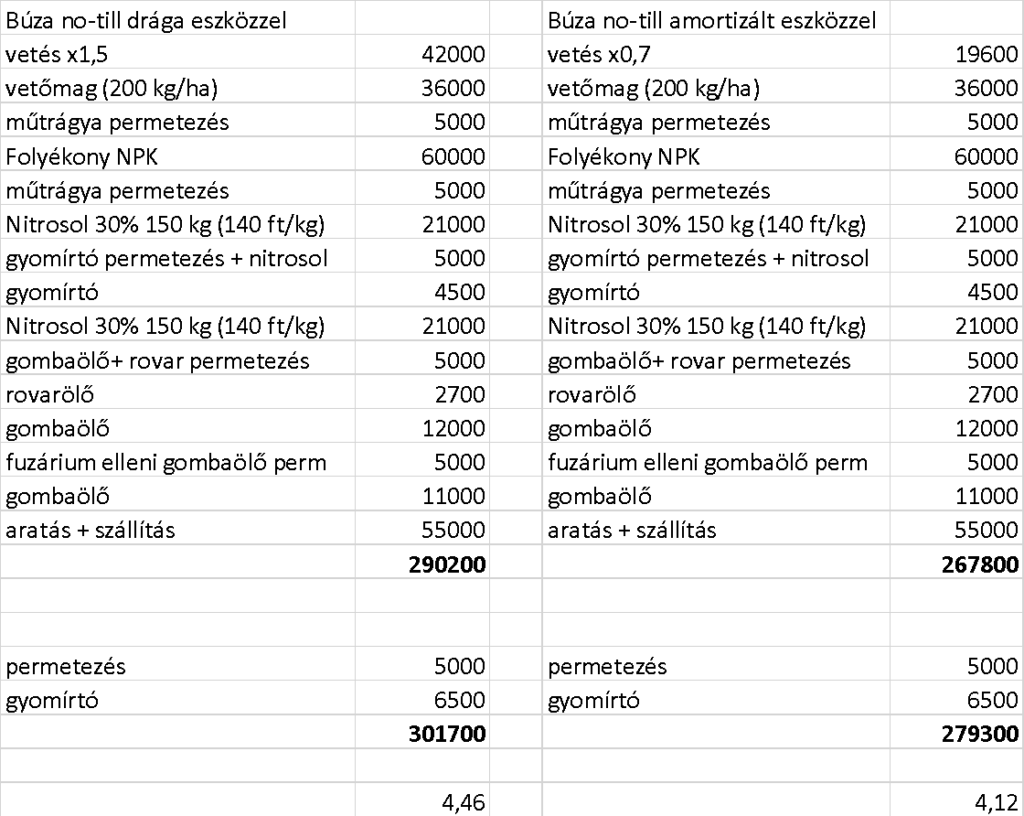
The tables illustrate the cost differences between the various technologies.
The bottom rows of the tables show the value 0.

The two extremes from the perspective of cultivation:

The difference between a new, expensive asset and a depreciated asset when using no-till technology:
Where is the zero level?
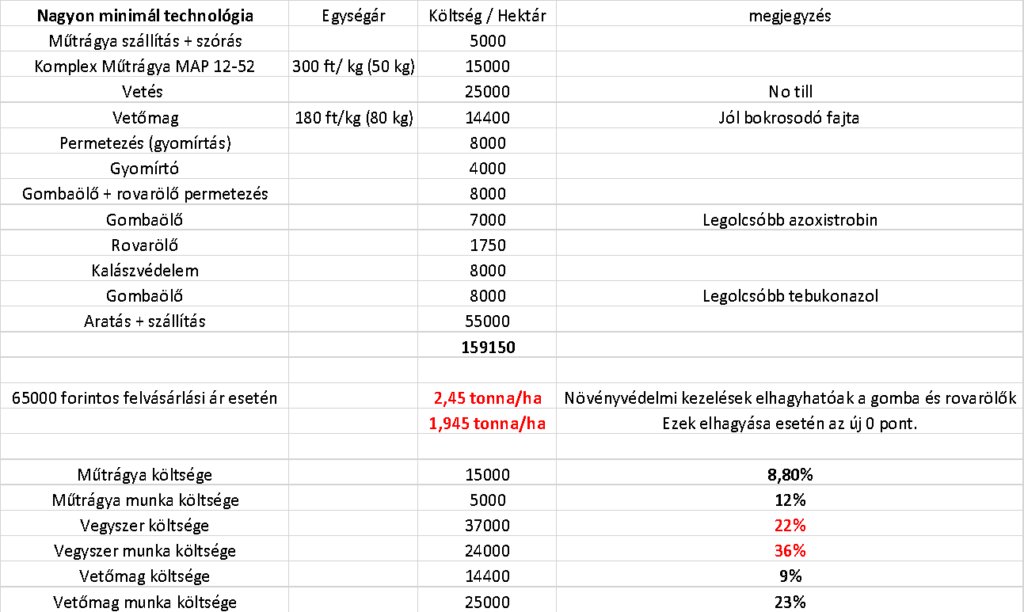
Based on the tables—and taking general operating costs into account—a yield of approximately 4.5 metric tons per hectare is required for the farm to break even at a purchase price of 65,000 HUF per metric ton.
At the beginning of the year, there was even talk of prices below 60,000 Ft per metric ton, so I currently consider the possibility of a lower purchase price to be more realistic than the idea that we’ll be able to sell the crop consistently for more than 70,000 Ft per metric ton.
A 4-metric-ton yield is by no means impossible, but in a country suffering from drought, it can easily remain a distant dream. So I tweaked the numbers a bit more and brought the yield down even further by reducing the amount of input materials and seeds—all while making sure that figure remained grounded in reality:
Conscious cost accounting is the foundation of competitiveness
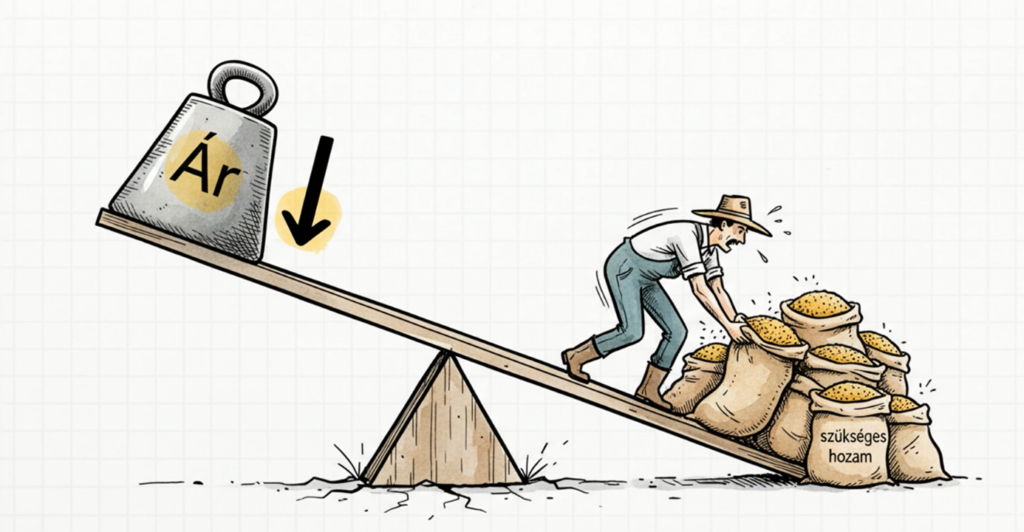
The producer cannot influence the purchase price, but can influence his own costs. A clear understanding of costs helps determine which technological elements are cost-effective, where expenses can be reduced, and at what yield level the farm becomes profitable.
One of the most important benefits of regenerative farming may be that, in the long term, it not only improves soil health but also strengthens the farm’s financial resilience.
 English
  Magyar
  Deutsch
  Slovenčina
  Українська
  Polski
  Русский
  Slovenščina