
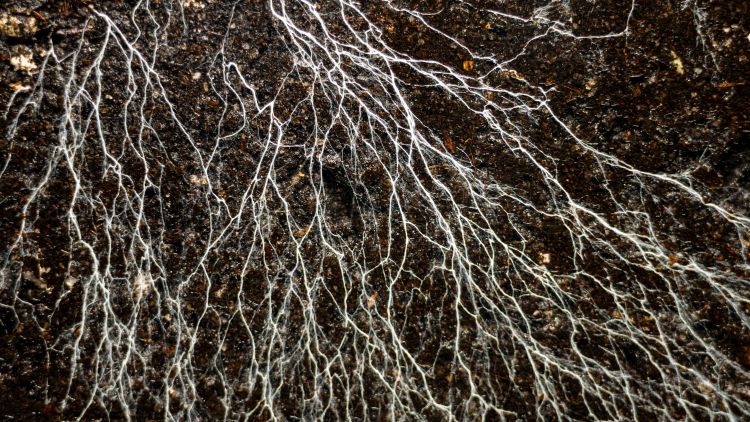
The secret of living soil
Efficient nutrient uptake pathways in regenerative farming
Soil life plays a fundamental role in nutrient cycling and nutrient uptake by plants. If the soil biota is damaged or weak, plants do not get all the nutrients they need, even when large amounts of fertilisers are added to the soil. In fact, fertiliser use plays a major role in reducing soil microbial biomass and diversity. Traditionally, plants have been taught to take up nutrients from the soil solution in the form of inorganic ions through simple physico-chemical processes such as osmosis or active transport. The role of soil micro-organisms is degraded to organic matter decomposition. This approach, however, treats plants as relatively passive actors and ignores the complex effects of the soil microbiome and the multifaceted dialogue between plants and microorganisms.
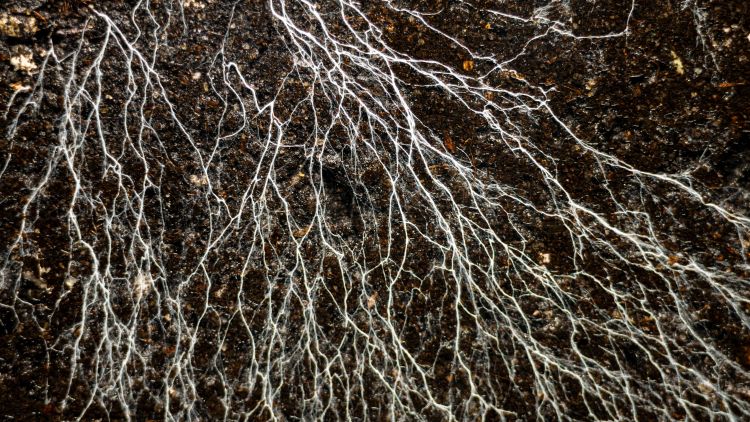
(photo: shutterstock.com)
The microbiome as a nutrient transport system
Research over the last decades has shown that microbes play a much more important role in nutrient uptake than previously thought. Plant and soil microorganisms work together in a close, symbiotic relationship. Some species of bacteria and fungi transport nutrients into the plant. Endophytic bacteria and mycorrhizal fungi, for example, help uptake phosphorus, nitrogen and micronutrients, while nitrogen-fixing bacteria provide atmospheric nitrogen and other bacteria mobilise soil-bound nutrients. Plants actively modulate these relationships, feeding beneficial microbes with root exudates and regulating processes with hormonal signals.
Nutrient uptake: a living, dynamic process
In a healthy soil, nutrient uptake is not just ion diffusion, but the result of a living, dynamic ecosystem. Together, the plant, microbes and the physico-chemical properties of the soil determine how much nutrient reaches the roots. The more alive and diverse the soil, the more pathways for nutrients to be taken up and the more resistant plants become to stresses. Therefore, modern, sustainable farming is based on maintaining and supporting soil biological activity, not just chemical nutrient replenishment.
Let's take a closer look at the relationships between soil, micro-organisms and plants, which are much more complex than textbooks suggest.
Rhizophage cycle: nutrients from the inside of the root
The rhizophagous cycle is a relatively new approach whereby plants not only take up nutrients as ions dissolved in soil moisture, but also actively „use” the microbes around them. In this process, bacteria and fungi move in a continuous cycle between the soil and the inside of the root. James White, a researcher at Rutgers University in the US, described the process (10.3390/microorganisms6030095), which completely changes the way we think about plant nutrient uptake.
The microbes live in the soil and collect nutrients: nitrogen, phosphorus and various microelements (iron, zinc, manganese, etc.). Around the root tip, the plant releases sugars and other substances (root exudates) that attract these microbes. Some of these microbes also enter the youngest cells of the root, the space between the cell wall and the cell membrane.
Here the plant produces reactive oxygen species - essentially a mild „oxidative stress” - which partially degrades the microbes. This releases nutrients that the plant can use. Not all microbes are completely destroyed: the survivors lose their cell walls three times, and then, as the root hairs grow, they return to the soil through the tips of the hairs, where they can replenish themselves with nutrients.
This cycle may explain why many plants are able to grow well even when there is little dissolved nutrient in the soil. The process may be specific not only to bacteria but also to some fungi and yeasts. We don't yet know exactly what proportion of the plant's nutrients are contributed, but John Kempf, a regenerative agriculture expert, says the rhizophagous cycle is the most crucial process of nutrient uptake in a healthy soil with a well-functioning microbiome. This gives a completely new perspective on the relationship between soil life and plant nutrient supply, especially in the context of biological and regenerative farming.
Micorrhiza: more nutrients in exchange for carbon
Mycorrhizal fungi play an extremely important role in plant nutrient uptake, as fungal filaments form a symbiotic relationship with roots and increase the surface area in contact with the soil many times over. These fungi penetrate the intercellular space between plant cells or directly into root cells. This facilitates plant access to key macroelements such as phosphorus and nitrogen, which are essential for root and shoot growth and higher yields. Mycorrhizae also support the uptake of important micronutrients such as zinc, copper and manganese, which play a key role in plant metabolism and stress tolerance. In return, the plant provides the fungi with sugars and other organic substances produced during photosynthesis. Bacteria associated with the fungi further enhance this effect by mineralising organic nutrients, dissolving phosphates and channelling them to the plant via fungal filaments.
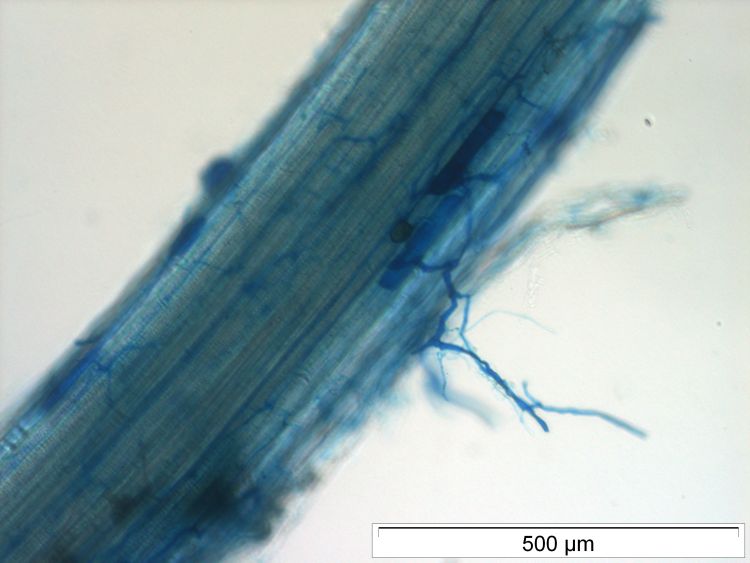
A mikorrhiza mushrooms, in addition to nutrient management, help water uptake, so plants can better survive dry periods. They also play a role in soil carbon balance as fungi bind and stabilise organic matter, improving soil fertility and long-term health. Mycorrhizae producealso contribute to the construction of the soil structure: fungal filaments and roots together form strong, stable aggregates that improve water and air movement in the soil and reduce the risk of surface erosion.
It is estimated that around 80-90% of terrestrial plants can form such a symbiosis. There are a number of mycorrhizal products on the market that can be used to inoculate our soils, but these fungi can also be grown naturally, just as we can make leaven from flour and water. Mycorrhizal fungi are particularly sensitive to soil disturbance. We can create a continuous habitat for them if we keep soil disturbance to a minimum and provide a constant, diverse plant root system. Mycorrhizal fungi build up extensive hyphal networks from plant roots, which are physically disrupted by conventional tillage, breaking down the hyphae and reducing the available fungal population in the soil. No-till systems, on the other hand, preserve existing hyphal networks, allowing the roots of the main crop to colonise more rapidly and intensively. Several studies have shown that no-till systems have higher colonisation of arbuscular mycorrhizal fungi (AMF), which improves nutrient and water uptake.
Cover crops maintain mycorrhizal fungi populations even in the absence of the main crop, as they serve as a continuous living host plant. The different cover crops support mycorrhizal fungi differently: cereals and legumes are generally good hosts, while certain brassicas can inhibit fungal growth through their bioactive substances. The presence of a continuous root system increases the soil inoculum of the fungi, so that the next main crop can colonise more quickly and intensively.
The combination of no-till and suitable cover crops creates an ideal environment for mycorrhizal fungi: the soil network remains intact and there is always a living host plant to feed the fungi. As a result, the roots of the main crop will colonise more vigorously, the uptake of phosphorus and other micronutrients will improve, drought tolerance will increase and the soil structure will be more stable due to the aggregating effect of the fungal hyphae.
Nitrogen fixation in butterflies: a natural source of N
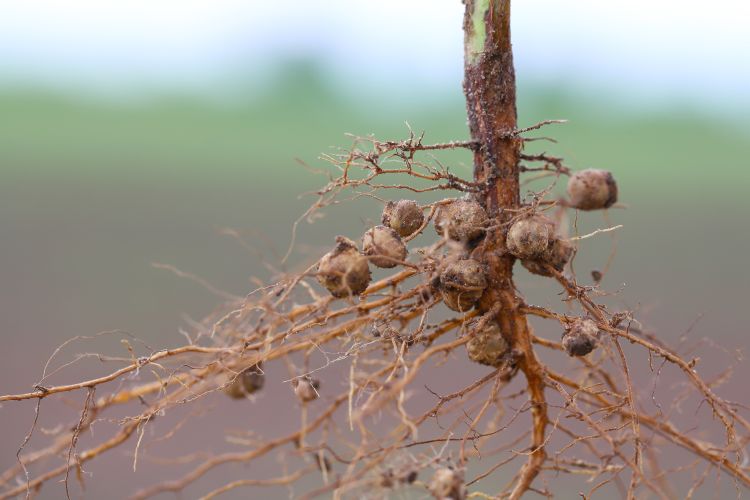
The nitrogen fixing capacity of butterfly plants has been known since the mid-19th century. In 1886 Hellriegel and Wilfarth In Germany, he has shown that leguminous plants such as peas and clover can use atmospheric nitrogen without a soil nitrogen source, and that this process is supported by the nitrogen that lives in the nodules that form on the roots of the plants. Rhizobium is linked to bacteria. The bacteria that colonise the root nodules convert nitrogen in the atmosphere into ammonia, a form that can be used directly by the plant. Through this process, butterflies can significantly reduce the need for fertilizers while improving the nitrogen content of the soil, which benefits the next crop.
Root nodule formation and the intensity of nitrogen fixation depend on the plant species, climatic conditions and the quality of the soil microbiome. Healthy, active Rhizobium population, butterflies can produce up to 50-80% of their total nitrogen requirements themselves. This also increases soil fertility, as the nitrogen fixed by the butterflies in the soil organic matter remain affordable in the longer term. For farmers, this means that the introduction of butterfly crops into crop rotation not only ensures nitrogen supply, but also reduces costs in the long term and contributes to the development of healthy, resilient crops.
LoginECO in Serbia, for example, provides all the nitrogen for their 3250 hectare farm by growing butterflies in rotation. However, the organic certified farm is not able to make significant improvements in soil structure due to soil fluffing by regular soil tilth.
What does this mean in practice in regenerative farming?
A Soil Renewal Farmers Association members create their blanket plant mixes so that they always include butterfly plants. The most common of these are sedge, purple vetch, horse bean, sand bean, Alexandrian vetch, forage pea, which can be included in the mix in proportions from 30 to over 60%, depending on the nitrogen fixing potential.
An advanced method of integrating butterflies is the use of intercropping. In this case, e.g., the ryegrass is sown in a single pass with one or more butterfly plants (e.g. winter wheat and peas). Towards the end of the growing season, at maturity, some of the nitrogen fixed by the butterfly plant is released and becomes available for uptake by the ryegrass. This not only saves on nutrient costs but also allows two different crops to be harvested from the same area.
Soil life is the basis for the supply of nutrients to plants. In the rhizophagous cycle, bacteria and fungi release nutrients inside the root, mycorrhizal fungi use their extensive hyphal network to increase the uptake of water and macro- and micronutrients while stabilising soil structure, and butterfly plants fix atmospheric nitrogen, enriching the soil and reducing fertiliser requirements.
This complex, living soil system allows plants to absorb nutrients efficiently, tolerate drought and produce higher yields. The key to regenerative farming is to support soil biological activity: reduce disturbance, maintain cover crops, and create healthy soil with an active microbiome that will serve the farm in the long term.
AUTHOR: VÍG VITÁLIA • SOIL ECOLOGIST, EDUCATIONAL PROGRAM MANAGER FOR THE ASSOCIATION OF SOIL REGENERATION FARMERS, FOUNDER OF TERRAVITKA
 English
  Magyar
  Deutsch
  Slovenčina
  Українська
  Polski
  Русский
  Slovenščina